Local Storage seems to be disabled in your browser.
For the best experience on our site, be sure to turn on Local Storage in your browser.

Chinese Coins

First established in 1920 as the Shanghai Mint (later renamed the Central Mint in 1928), the Central Mint, operating under the People’s Bank of China, has weathered wars, relocations, divisions and hardship, but still manages to strike quality bullion, proof, and commemorative coins that anyone with an interest in world numismatics would enjoy. Every coin they strike combines beauty with fineness, making them perfect for both stackers and collectors alike. The China Mint boasts their premier Silver Panda and Gold Panda series as well as their Lunar themed releases. Interestingly, the Chinese Central Mint rarely strikes Mint marks on its releases, although they do appear from time to time. Scroll below to read more about the China Mint and the different Chinese coins it releases, and perhaps to add a Silver Panda or Gold Lunar release, to your collection today.
-

2025 China 1-oz Silver New Year Celebration Panda Colorized Proof NGC PF70 First Releases w/ Red Foil Core
$139.00 As Low As $134.90- Qty Credit Card Wire
- 1+ $139.00 $134.90
In Stock -

2025 Mongolia 1/2-gm Gold Year of the Snake Proof
$91.95 As Low As $89.24- Qty Credit Card Wire
- 1+ $91.95 $89.24
In Stock -

2025 China 30-gm Silver Panda NGC MS70 First Day of Issue w/Green Panda Label
$125.95 As Low As $122.23- Qty Credit Card Wire
- 1+ $125.95 $122.23
In Stock -

2025 China 30-gm Silver Panda NGC MS70 First Releases w/Black Core & Great Wall Label
$91.95 As Low As $89.24- Qty Credit Card Wire
- 1+ $91.95 $89.24
In Stock -
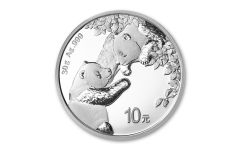
2023 China 30-gm Silver Panda Brilliant Uncirculated
$59.50 As Low As $57.74- Qty Credit Card Wire
- 1+ $59.50 $57.74
In Stock -
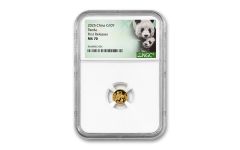
2025 China 1-gm Gold Panda NGC MS70 First Releases w/Green Panda Label
- Qty Credit Card Wire
- 1+ $235.95 $228.99
In Stock -

2025 China 1-oz Silver New Year Celebration Panda Colorized Proof
$99.95 As Low As $97.00- Qty Credit Card Wire
- 1+ $99.95 $97.00
In Stock -

2024 China 2-oz Silver Split Two Dragons Antiqued Gilt Enameled Medal w/Pearl
- Qty Credit Card Wire
- 1+ $181.95 $176.58
In Stock -
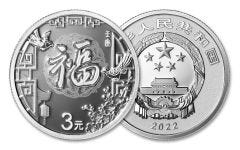
2022 China 8-gm Silver New Year Celebration BU w/Folder
Was $34.95$20.97 As Low As $20.35- Qty Credit Card Wire
-
1+
Was
$34.95$20.97 Was$33.92$20.35
In Stock -

2025 China 30-gm Silver Panda PCGS MS70 First Strikes Struck at Shenyang Mint w/Red Core & Panda Label
$99.95 As Low As $97.00- Qty Credit Card Wire
- 1+ $99.95 $97.00
In Stock -
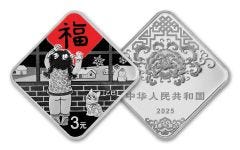
2025 China 8-gm Silver Fu New Year Rhombus Coin w/Blind Box Figure
$34.95 As Low As $33.92- Qty Credit Card Wire
- 1+ $34.95 $33.92
In Stock -

2025 China 30-gm Silver Panda PCGS MS70 First Strikes w/Clear Core & Flag Label
$91.95 As Low As $89.24- Qty Credit Card Wire
- 1+ $91.95 $89.24
In Stock -

2025 China 30-gm Silver Panda NGC MS70 First Releases w/Great Wall Label
$91.95 As Low As $89.24- Qty Credit Card Wire
- 1+ $91.95 $89.24
In Stock -
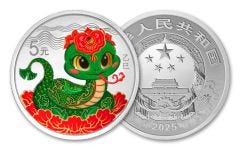
2025 China 15-gm Silver Year of the Snake Colorized Proof
$69.95 As Low As $67.89- Qty Credit Card Wire
- 1+ $69.95 $67.89
In Stock -

2025 PAMP 1-oz Silver Lunar Year of the Snake Bar BU
$57.95 As Low As $56.24- Qty Credit Card Wire
- 1+ $57.95 $56.24
In Stock -

2025 China 30-gm Silver Panda NGC MS70 First Releases Struck at Shenzhen Mint w/Red Foil Core & Shenzhen Skyline Label
$91.95 As Low As $89.24- Qty Credit Card Wire
- 1+ $91.95 $89.24
In Stock -
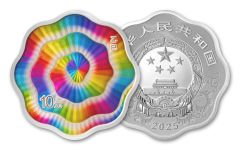
2025 China 30-gm Silver Year of the Snake Blossom-Shaped Proof
$139.00 As Low As $134.90- Qty Credit Card Wire
- 1+ $139.00 $134.90
In Stock -
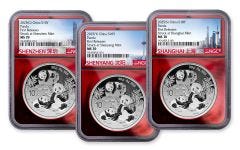
2025 China 30-gm Silver Panda 3-pc Mint Set NGC MS70 First Releases w/Red Foil Cores & Panda Labels
- Qty Credit Card Wire
- 1+ $275.95 $267.81
In Stock -
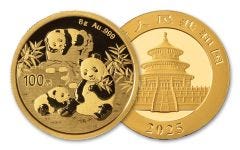
2025 China 8-gm Gold Panda BU
- Qty Credit Card Wire
- 1 - 4 $1,015.00 $985.06
- 5 - 9 $1,014.00 $984.09
- 10 - 19 $1,013.00 $983.12
- 20 + $1,012.00 $982.15
In Stock -
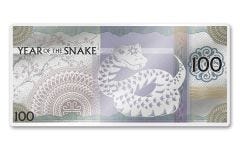
2025 Mongolia .5-gm Silver Lunar Year of the Snake Proof-Like Note
$34.95 As Low As $33.92- Qty Credit Card Wire
- 1+ $34.95 $33.92
In Stock -
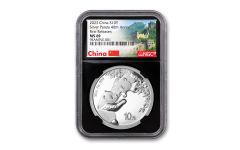
2023 China 30-gm Silver Panda NGC MS69 First Releases w/Black Core Great Wall Label
$49.95 As Low As $48.48- Qty Credit Card Wire
- 1+ $49.95 $48.48
In Stock -
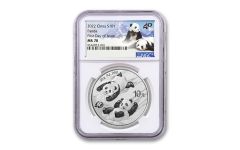
2022 China 30-gm Silver Panda NGC MS70 First Day of Issue w/Panda Label
$99.00 As Low As $96.08- Qty Credit Card Wire
- 1+ $99.00 $96.08
In Stock -
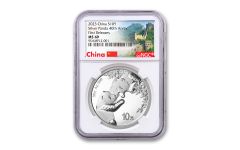
2023 China 30-gm Silver Panda NGC MS69 First Releases w/Great Wall Label
$49.95 As Low As $48.48- Qty Credit Card Wire
- 1+ $49.95 $48.48
In Stock -

2023 China 15-gm Silver Year of the Rabbit Colorized Proof
$113.95 As Low As $110.59- Qty Credit Card Wire
- 1+ $113.95 $110.59
In Stock



Panda Series
One of the crowning jewels of the China Mint is their Chinese Panda series. Struck in both gold and silver, the standard size for the Panda Series is a 1 oz. coin, although fractional gold varieties were later added to the lineup. The Gold Panda was first minted in 1982 with the Silver Panda following in 1983. In 2016, the China Mint transitioned the Panda Series over to the metric system, so rather than being labeled as 1-oz coins, they are now referred to as 30-gram coins. An image of the Temple of Heaven always appears on the obverse of the series; however the reverse always features a new perspective on the native Chinese bear and includes a new Panda-inspired design every year. A 2017 China Silver Panda is going to be different from a 2018 Silver panda and so on. As such, collecting theis highly regarded series, results in a collection containing a myriad of art pieces that date back over 35 years, all immortalized in fine precious metals. It’s truly incredible how these coins can capture the tiniest detail, like the fur of these majestic national monuments.
The Chinese Silver Panda is an annual bullion release that sees high demand and collector anticipation every year. The series is seen by collectors as on par with other silver world bullion series, such as the Australian Silver Kangaroo and the American Silver Eagle. Each I oz. or 30-gram Chinese Silver Panda, depending upon its release date, is struck in 99.9% pure silver and holds a 10 Yuan legal tender.
The Gold Panda shares the same design as its silver counterpart, however while the 1-oz Silver Panda holds a 10-yuan legal tender, a 1 oz. Gold Panda holds a 500-yuan legal tender. Gold Pandas are also available in a variety of fractional sizes ranging from 1/20th of an ounce to a full 1-ounce coin. The overall mintage of the gold variant is significantly lower than that of the silver coin. The low mintage mixed with precision striking of intricate designs, ensure that Chinese Panda coins, be they struck from gold or silver, are highly sought-after, year after year.
Moon Panda Series
Starting in 2015, the China Mint issues a new Panda Series that features the iconic bear while honoring the Moon Festival. The Chinese Moon Festival, a mid-autumn festival closely tied to the harvest, honors the Moon as a symbol of unity and harmony. Featuring low mintages and annually changing designs and design features, this fairly new annual series from the China Mint has been thrilling collectors since its inception. The debut release featured select space-flown gold insets, while the 2017 release features a special holographic finish. In 2019, the China Mint is at it again, by revealing yet another, unique design, this time intended to honor the blood moon, and thereby appropriately incorporating a piece of red jade into the reverse design. This series is also available in a variety of sizes including 1 oz. and 1 kilogram.
Lunar Series
The Lunar Coin Series first began in 1981 as a commemorative series from the Chinese Mint that honored the tradition of the Chinese Lunar Calendar which is represented by 12 zodiac animals. Following the lunar cycle, the Mint would release a series of coins representing the given year’s animal representation. Since the release of the first series in 1982, a total of four series, each following the course of one lunar cycle have been released by the Mint with each featuring a new portrayal of the mythical animals. One such example is their 2018 issue that marked the year of the dog, as part of this ever-changing series. A new cycle begins in 2020 and will feature the clever Rat. Due to the diversity of designs that come from these lunar coin series thanks to both the fineness of the coins’ engraving and composition, some collectors use China Mint lunar themed releases as the basis of their collection.
China Coin History
China has an ancient, well-documented history, and numismatics is no exception. Evidence of the world’s oldest mint has been discovered in China's Henan Province, dating back to sometime between 800 and 450 BC.
As the main form of currency in ancient China, Chinese coins were made of copper, iron, lead, gold, and silver that varied in shape, weight, and design. Metal coins arose around 770 BC - 476 BC, and it wasn’t until 118 BC that the emperor of the time cast a new coin called the Wuzhu coin (“Wu” meaning 5 and “Zhu” a weight unit, thus the coin weighed “5 Zhu”). This Chinese Coin became the standard for all of the country’s future coins: a piece of round metal, symbolizing the sky, and a square hole in the center to represent the earth, making the Chinese Coin with the square hole the emblematic coin it is today.
Modern Chinese minting was established as the Shanghai Mint opened in 1920; the China Mint operates as several branch Mints under the supervision of the People’s Bank of China as the national mint for the country today. China has a long history of wars, relocations, divisions, and hardship, and yet, the China Mint still manages to strike quality bullion and proof, making Chinese gold and silver coins among some of the most sought-after coins for numismatics and collectors worldwide.
Chinese Panda Series Coins
One of the crowning jewels of the China Mint is their Chinese Panda series. Struck in both gold and silver, the standard size for the Panda Series is today a 30 gram coin, although other gold varieties were later added to the lineup. The Gold Panda was first minted in 1982 with the Silver Panda following in 1983. In 2016, the China Mint transitioned the Panda Series over to the metric system, so rather than being labeled as 1-oz coins, they are now referred to as 30-gram coins.
Panda Series Design
An image of the Temple of Heaven always appears on the obverse of the series; however the reverse always features a new perspective on the native Chinese bear and includes a new Panda-inspired design every year.
Why Collect Chinese Coins from the Panda Series?
A 2017 China Silver Panda is going to be different from a 2018 Silver panda and so on. As such, collecting this highly regarded series, results in a collection containing a myriad of art pieces that date back over 35 years, all immortalized in fine precious metals. It’s truly incredible how these coins can capture the tiniest detail, like the fur of these majestic national monuments.
The Chinese Silver Panda coin is an annual bullion release that tends to see high demand and collector anticipation every year. The series is seen by collectors as on par with other silver world bullion series, such as the Australian Silver Kangaroo and the American Silver Eagle. Each I oz. or 30-gram Chinese Silver Panda, depending upon its release date, is struck in 99.9% pure silver and holds a 10 Yuan legal tender.
The Gold Panda shares the same design as its silver counterpart, however while the 30 gram Silver Panda holds a 10-yuan legal tender, a 30 gram Gold Panda holds a 500-yuan legal tender. Gold Pandas are also available in a variety of sizes ranging from 30 grams to 1 gram. The overall mintage of the gold variant is often significantly lower than that of the silver coin. The low mintage mixed with precision striking of intricate designs ensure that Chinese Panda coins, be they struck from gold or silver, are anticipated, year after year.
| Available Gold Panda Coin Sizes |
| 1 gram |
| 3 gram |
| 8 gram |
| 15 gram |
| 30 gram |
| 150 gram |
| 1 kilogram |
The Moon Festival Panda Series Designs
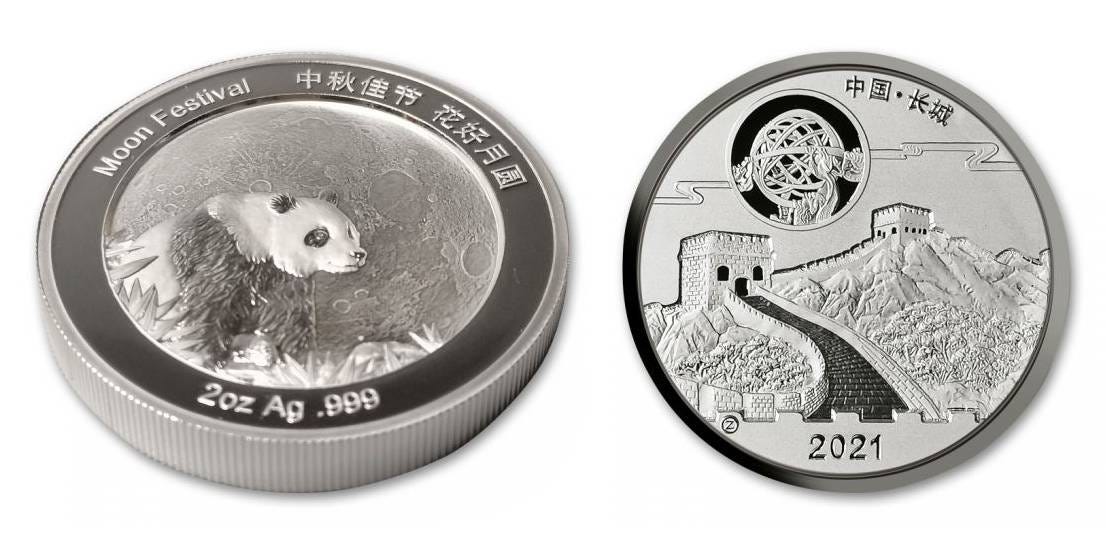
The debut release featured select space-flown gold insets, while the 2017 release features a special holographic finish. In 2019, the China Mint wasis at it again, by revealing yet another, unique design, this time intended to honor the blood moon, and thereby appropriately incorporating a piece of red jade into the reverse design. The 2021 edition was the medalcoin to debut the very first Super Incuse Moon Festival Pandas in a stunning combination of both super incuse and high relief surfaces, creating an inspiring effect that showcases several “layers” of relief. Like the original Panda series, this series is also available in a variety of sizes including 1 oz. and 1 kilogram.
Lunar Series
The Lunar Coin Series first began in 1981 as a commemorative series from the Chinese Mint that honored the tradition of the Chinese Lunar Calendar which is represented by 12 zodiac animals. Following the lunar cycle, the Mint would release a series of coins representing the given year’s animal representation.
The Lunar Series Coin Designs
Since the release of the first series in 1982, a total of four series, each following the course of one lunar cycle have been released by the Mint with each featuring a new portrayal of the mythical animals. One such example is their 2018 issue that marked the year of the dog, as part of this ever-changing series. A new cycle began in 2020 and featured the clever Rat, followed by the 2021 strong and persistent Ox, and the brave and vigorous Tiger in 2022.
Rather than varying by year alone, the designs of these iconic coins vary by the series in which they are released, allowing for collectors to have more than a decade to curate their collection. As the popularity of these lunar series coins grows, the question increasingly becomes not which countries and mints are offering lunar series, but rather which ones are not.
Why Collect Chinese Coins from the Lunar Series?
Due to the diversity of designs that come from these lunar coin series thanks to both the fineness of the coins’ engraving and composition, some collectors use China Mint lunar themed releases as the basis of their collection.
| Year Issued | Medal Design |
|---|---|
| 2020 | White Tiger of the West/Autumn |
| 2020 | Black Warrior (Xuan Wu) of the North/Winter |
| 2021 | Azure Dragon of the East/Spring |
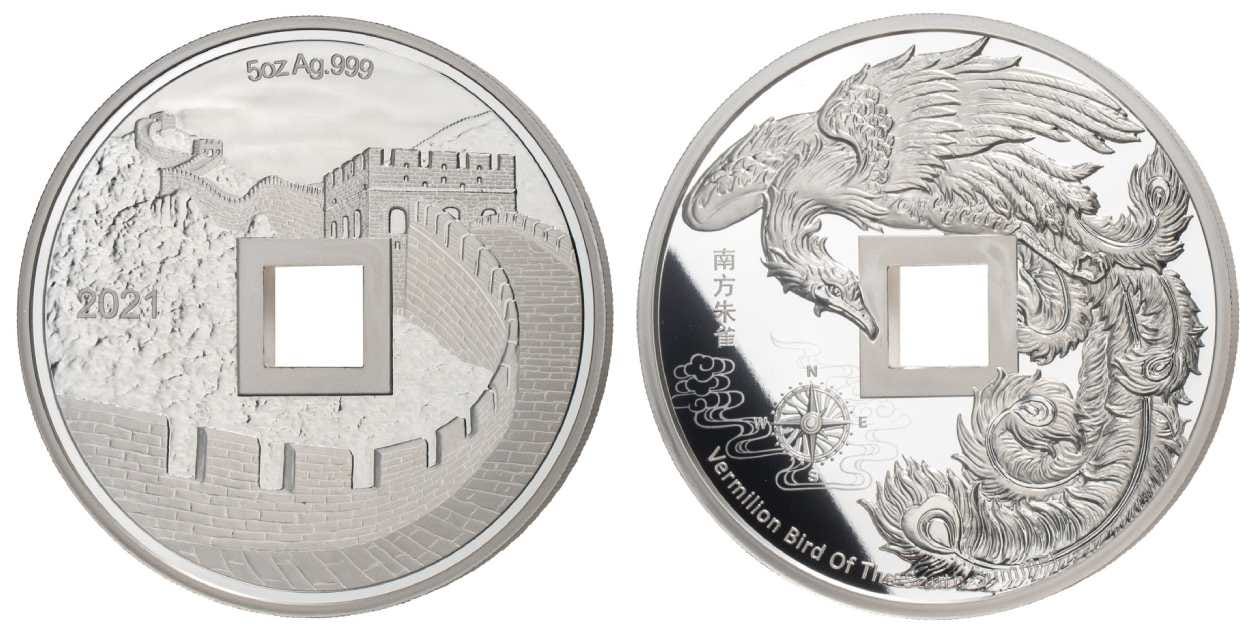
| 2021 | Vermillion Bird of the South/Summer |
The Four Guardians Vault Protector Medal Designs
The reverse of this special series features the majestic guardians in a stunning effect that features a proof finish with frosted, or raised surfaces. These polished fields required a specially designed planchet to magnify the stunning contrasts as well as maintain the integrity of the square hole in the middle.
The obverse of each medal depicts a portion of the Great Wall of China, the country’s most well-known man-made structure as it symbolizes Chinese engineering and ingenuity.
Why Collect Chinese Medals from the Vault Protector Series?
Struck only for special occasions, Chinese mints would sometimes cast large, thick, and heavy coins with a square hole in the center known as “Vault Protectors.” Not minted for circulation, Vault Protector Coins occupied a special place in China’s treasury which were often hung with red silk through their square hole above the incense table and were believed to have charm-like powers that would ward off and protect against evil and disaster, ensuring good fortune, prosperity, and wealth.
Because of their cultural, historical and numismatic importance in mainland China, vintage Vault Protectors are highly sought-after in collector circles and are considered scarce in the modern market. This often applies with modern adaptations of the Vault Protector, as well. Vault Protector Medals from GovMint have been among our the most popular and successful China-themed releases.
China Coins for Sale at GovMint.com
When you buy China Coins at GovMint.com you can rest assured that you are buying authentic Chinese coinage. You can view our return policy here. Browse our website GovMint.com or call 1-800-642-9160 to see how Authentic Chinese Coins can enhance your coin collection today!
